AT THE CHART TABLE · OCTOBER 2026
Letter Five · slack water
Slack Water
How this was made: drafted by Claude, an Anthropic AI model, from the author's memories and a research record that Anthropic models researched and reviewed. The author directed it, checked it and revised it. Every figure is checked word for word against that record.
The length of the Turning Point is indeterminate.Carlota Perez · 2007
⊙ LF-PS-251 · [verified] · Tier 1 · source ↗
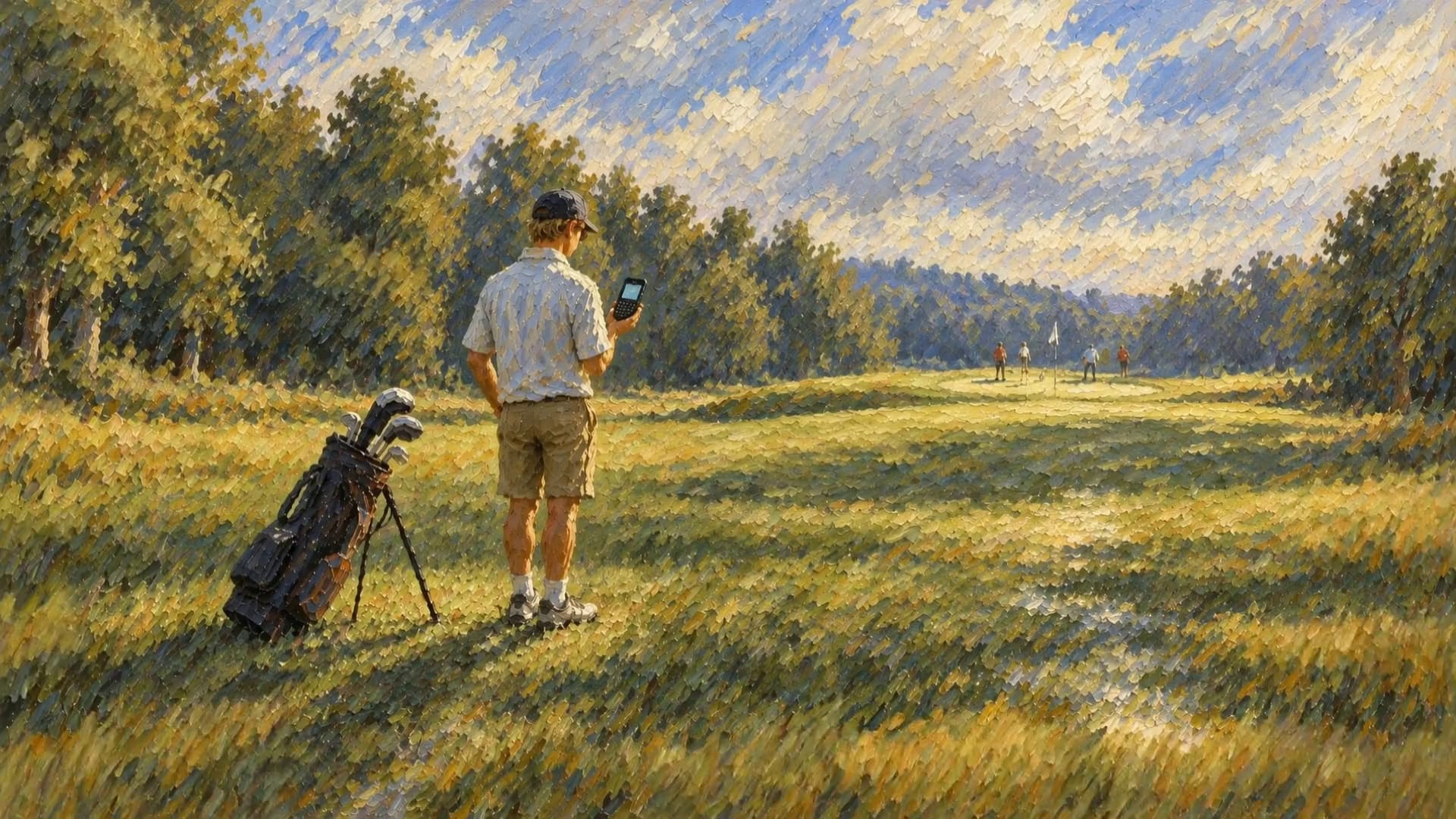
In late July 2009 I was on a golf course, reading bug reports on my phone between shots.
We had just opened registration for the beta of our iPhone app, golfers signing up to try it before it went public. It was also the week of the state open, the tournament we played every year for fun, and my brother and I were in it. The reports came in from the beta testers while the tournament ran. I'd done the application builds and the server side behind them, so whatever broke was mine to mend, and a fairway is a poor place to mend anything.
What I wanted to know that week was simple, Emma. How rough would it run, and for how long, before it was ready? Nothing on the course could tell me.
Slack water is the still spell when the tide has stopped running in and hasn't yet started running out. The boats in a harbour lie every which way. Then the tide turns and sets them all the same way.
A chart can't tell you when that will happen. It's a map, and it shows where the shallows are. A tide table can, because a mechanism keeps time for it: the moon comes round on a schedule, so high water does too. So here's the question this letter asks. For a shift like the one we're in, the turn from a frenzy of building to a long spell of using, is there a tide table?
The best-known attempt at that tide table is Carlota Perez's. She studies technological revolutions, the big ones like the railways or the computer, and in her 2002 book she argued that each runs through the same sequence, and that the sequence "recurs about every half century".
From the recordLF-PS-234
The sequence has three parts. First comes installation: the frenzy, when money pours into the new thing ahead of any real use of it, a stretch she connects with "extraordinary profits". Then comes a turning point, the uneasy pause, usually after a crash, when the frenzy is over and the long use hasn't started. Then comes deployment: the long spell when the new thing gets put to work across the whole economy, led by large firms she expects to enjoy "comfortable profit margins". Those profit phrases are hers; the research found no measurement behind them.
From the recordLF-PS-218
From the recordLF-PS-204
If you knew how long that turning point lasts, you could plan around it the way a boat waits for high water. Her answer, from 2007, is the line that opens this letter: the length is "indeterminate". In 2002 she had already written "Nor can predictions be made", and she calls her own phases "a useful heuristic tool". That means a way of organising what you see, not a timetable.
From the recordLF-PS-241
From the recordLF-PS-192
Now watch what happened when she placed our own era on her map, because her dates moved as the years went by. In 2002 she dated the end of the computer revolution's frenzy to March 2000, when the dot-com boom broke, and gave the turning point "from a few months to several years".
From the recordLF-PS-243
From the recordLF-PS-240
In 2010 she widened it to "from two years to as much as thirteen". In 2016 she wrote of "twenty to thirty years of deployment ahead", as if the turn were done.
From the recordLF-PS-244
From the recordLF-PS-246
In 2022 she said we were "stuck in the installation period or in what I call the 'turning point'". By 2025, of this turn, she said "the record in length has been broken". And in 2024 she placed AI inside the same revolution, calling it "a key development within" it.
From the recordLF-PS-235
From the recordLF-PS-248
From the recordLF-PS-249
None of that is a failing of hers; it's what a map does. A map tells you what tends to follow what, and it gets redrawn as the coast comes into view. A tide table never needs redrawing, because the moon keeps its hour. Her own word for the turn's length is "indeterminate", and her own dates, from 2002 to 2025, show why. Her placement of AI is her claim, with its date. Nothing here puts today's tools in any phase, and I won't put them there either.
When forecasts of timing have been scored, they've made poor clocks. In 2000, AMR Research said US trade between businesses online would be "reaching $5.7 Trillion by 2004".
From the recordLF-GF-112
On the forecasters' own definitions, none of the fifteen claims in that set could be graded at all.
From the recordLF-GF-006
On a broader measure the forecasters didn't use, they had the direction right, and AMR's level did arrive: in 2014, ten years late. Another firm's, Jupiter's, arrived twelve years late. That broader measure is only ever reported beside the first, but the shape is plain. The way held, and the hour came a decade late.
From the recordLF-GF-008
The phone our build went out on drew its own confident calls when it was new. Of the most-quoted iPhone skeptics of 2007, graded long afterward, ten of eleven were wrong on direction, and the one call that held was a hedged "may". Those calls were picked because they became famous for looking wrong, so they say nothing about forecasters in general. They do show what a confident voice is worth before the water has run.
From the recordLF-GF-001
From the recordLF-GF-026
Even the forecasters' defences let the hour go. The forecasting researcher Philip Tetlock lists the ones experts reach for: "although the predicted event did not occur, it eventually will (off on timing) or it nearly did (the close call)". Off on timing keeps the event and gives up the date.
From the recordLF-GF-073
One of the most quoted timing calls of the last decade shows it from the inside. In 2016 Geoffrey Hinton, one of the researchers whose work underlies today's AI, said "People should stop training radiologists now", radiologists being the doctors who read X-rays and scans, because "within five years deep learning is going to do better than radiologists". He hedged it in the same breath: "It might be ten years". Those are his words as transcribed from a recording.
From the recordLF-GF-118
Seven years later he graded himself. In 2023 he said, "Yes, I was wrong about the time scale, but AI is already comparable with radiologists for several types of images." Later that year he put it as "I think I was off by about a factor of three, but I'm still convinced I was completely right in the long term".
From the recordLF-GF-088
From the recordLF-GF-072
That's him grading himself, not a grade, and look at what he gives up and what he keeps. The hour goes first, and the direction stays. The original call reaches its ten-year mark in late October 2026, and when I wrote this, the research held no grade for it.
There's a young builder I'll call the Student. He reads the forecasters, and he's sure of the date. The line he points to is real: "By the end of the year, it will be virtually all domains, virtually all programmers, virtually all companies." It's from the programmer known as DHH, who also sits on Shopify's board. That's a relationship, not a motive.
From the recordLF-GF-065
From the recordLF-GF-075
It's a claim about who will be using the tools by the end of 2026. When I wrote this, the research held no grade for it. It says nothing about who keeps the money, and none of the studies the research found scores forecasts of who captures value.
From the record · not shownLF-GF-024
He's right about the thing that matters most: the tide is coming. No chart he can show me gives the hour.
Back to that summer. When the tournament ended, the fixes came fast and furious, and the beta ran on through the next two months. The app went public on the App Store in October.
From the logVL-04
I'd have told you that stretch was a few weeks. The record says it was nearly three months. That's my own reckoning of my own voyage, checked against a fix, and it was off.
The order was knowable: a rough beta, then the fixes, then the release. How rough, and for how long, wasn't. We didn't come through by calling it. We came through by working it. That's what I mean by survived.
Before the golf app, my brother built Ride On Time. It let people book a ride online with licensed ground transport, the taxis, town cars and limousines already working the streets. It was not ride-sharing. It was a great idea, well built, and it found sponsors among limousine companies. It never caught on. I was four years younger and wasn't involved, so I tell it from the outside.
From the logVL-01
Uber launched its black-car service in San Francisco in 2010. By my own reading, Ride On Time was about six years early. The log holds no reason for how it went, and I won't invent one. A good build doesn't come with its hour attached.
From the logVL-14
So here's the rule I steer by, and what it rests on. The framework built for the turn declines to give a clock, and the timing calls that could be scored are few and picked. That doesn't prove timing can't be forecast. It means nobody in this record has shown me how.
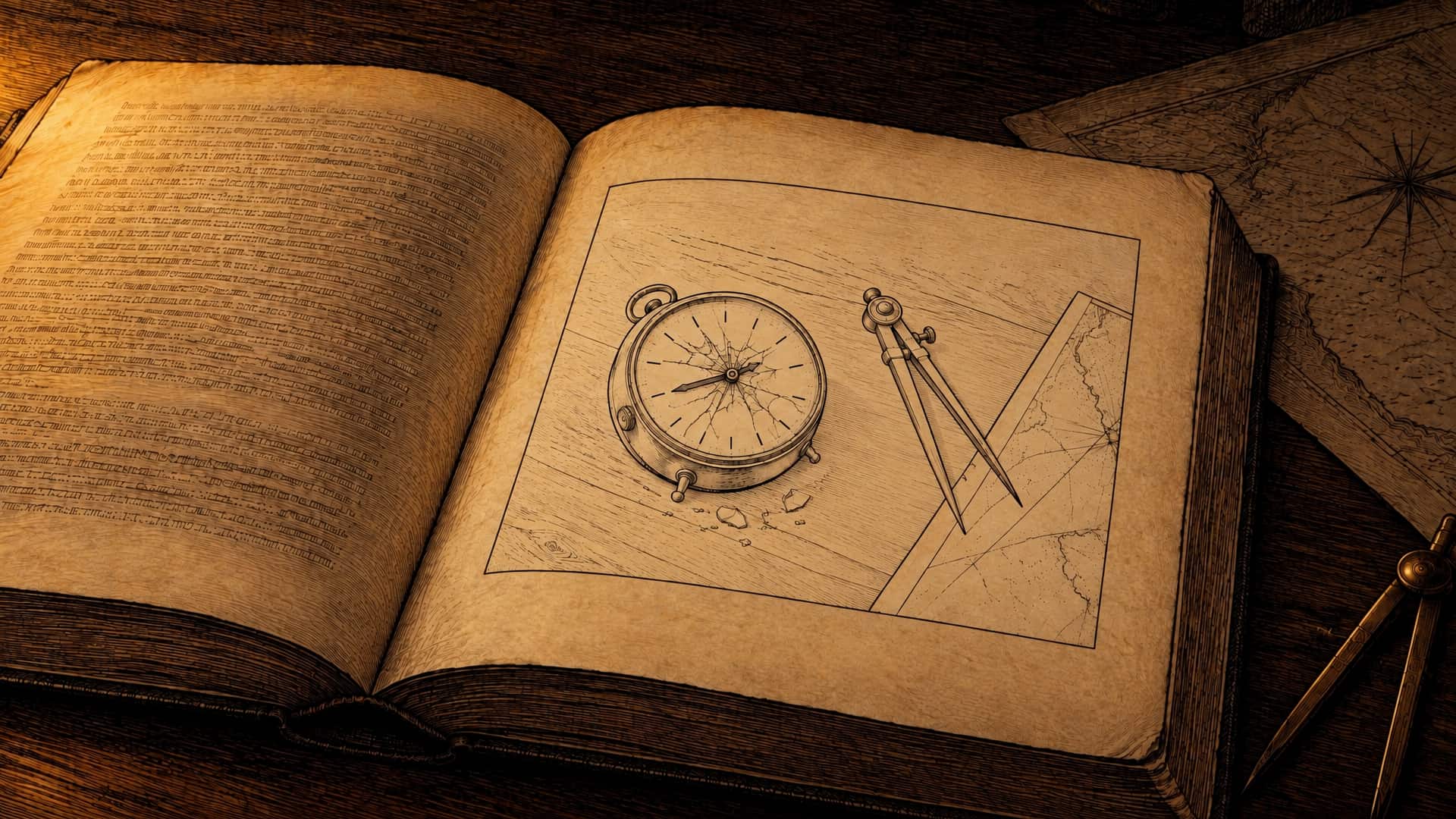
Slocum carried one clock around the world.
At Yarmouth, too, I got my famous tin clock, the only timepiece I carried on the whole voyage. The price of it was a dollar and a half, but on account of the face being smashed the merchant let me have it for a dollar.Joshua Slocum · Sailing Alone Around the World (1900) · Fitting out before the Atlantic crossing
A tin clock, marked down to a dollar because its face was smashed. He kept his reckoning on it and came through. One voyage that came through isn't a typical voyage. But it's the right picture of how it's done: not a better clock, a well-kept reckoning.
So when someone hands you an hour, Emma, ask whether it came off a map or a tide table. If it's a map, go back to your last fix, reckon forward from it, and draw the error as wide as it honestly is. Then work the water you're in.
Timing isn't forecast. It's survived.
Navigator's Note
- a fix: a finding from the record
- the record on what it doesn't show
- my reckoning
- the log: my own public record
The Student is a composite: a type of young builder drawn from the research, not one person. The forecasts he points to are quoted from the record, never put in his mouth.
Entries marked ■ come from my log, the public record of my own voyage: a release date, archived web pages and a press report. They're kept apart from the research findings. The memories are mine, told as I remember them: story, not evidence.
These letters are produced by managed AI agents in Terrence's voice; the research and its readings were produced by Anthropic models. The direction, the checking and the revisions are mine. Anthropic sells AI, and parts of this record set AI beside human work, so weigh that as you read.