AT THE CHART TABLE · OCTOBER 2026
Letter Four · set and drift
Set and Drift
How this was made: drafted by Claude, an Anthropic AI model, from the author's memories and a research record that Anthropic models researched and reviewed. Anthropic appears in that record too, and is held to the same words as OpenAI, Google and Microsoft. The author directed it, checked it and revised it. Every figure is checked word for word against that record.
Set refers to the current's direction, and drift refers to the current's speed.Nathaniel Bowditch (orig.); NIMA / NGA · The American Practical Navigator (Pub. No. 9) (2002) · Navigation manual definition

The television lit the room blue, and the game ran on over the click of controllers while I sat at the end of the couch with the laptop on my knees.
That was the unpaid year, 2008 into 2009. I hauled that laptop from friend's house to friend's house and coded while they played: a builder in a room full of players. Apple's App Store had opened, but our iPhone version was still a year away, and the BlackBerry build was carrying the work. It ran on the Curve 8330, a business phone with a small keyboard, on a platform BlackBerry owned.
I was building on one company's platform toward another company's store, and I hadn't read the terms of either. Every line of that work sat in someone else's water, Emma, and I didn't draw it on my chart.
The navigator's manual quoted above gives the two words: set is the direction a current pushes you, and drift is how fast. You can't feel a current from your own deck, because everything aboard moves with the water. You find it by comparing where you reckoned you were with a fix. The gap between them is the current.
In this letter the current is other people's terms. They move you while your bow points exactly where you chose.
Start with the plainest current, the toll for passing through someone's store. The owners post it themselves. Apple charges developers 15% if they earned under $1 million the year before.
From the recordLF-PP-032
Google Play charges 10% on the first $1 million, plus a 5% billing fee, from 30 June 2026.
From the recordLF-PP-033
On paper those are light tolls, and I'll say so plainly, because it's fair to the owners. But a posted rate is what the gate charges. It isn't what anyone kept.
Not every owner posts a rate. Roblox, a platform where players build games for other players, pays its developers an amount "determined by Roblox in its sole discretion". That's a current whose direction you can read and whose speed you can't.
From the recordLF-DR-050
Owners don't only set the toll. They can end the ground you built on, and each of them posts a notice when it does. Google's notice says that on "March 22, 2027: Firebase Studio is shut down, and all remaining data is permanently deleted and cannot be recovered".
From the recordLF-DR-069
OpenAI announced that its Sora app would shut down, on 24 March 2026. Anthropic stated that Cowork was merged into Claude, on 16 September 2026.
From the recordLF-PP-104
Microsoft stopped new Access web apps in June 2017 and shut them down by April 2018, and says its desktop databases "were not impacted". That's the seller of the replacement speaking.
From the recordLF-DR-066
Four companies, the same kind of notice. Whoever holds the platform decides whether it continues. Frank Herbert gives Paul a line for the Guild navigators, the pilots who steer by foresight, that says it more bluntly than I would.
The power to destroy a thing is the absolute control over it.Frank Herbert · Dune (novel, 1965) · Paul-Muad'Dib to the Guild navigators
Read it for what it says. I don't take it as a charge against anyone: the owners above gave notice, and some of them left a way out. It's a description of where control sits. The party that can end a thing holds it.
Where the reach of an owner is tested, it's written down by a court. In the Turtle WoW case, over a private server running a copy of an old online game, a consent judgment, an order entered on terms both sides agreed, bars private servers, modded clients, asking for donations, and handing the work on to a successor. The judgments were entered on 15 April 2026.
From the recordLF-DR-035
From the recordLF-DR-042
At the buyer's end of the chain, Sony's terms for its PlayStation store say that "all Content provided through PSN is licensed on a non-exclusive and revocable basis". What a buyer holds there is permission, and the owner can take it back.
From the recordLF-DR-061
This control isn't hidden. It's in court records and terms of service, and it's wide.
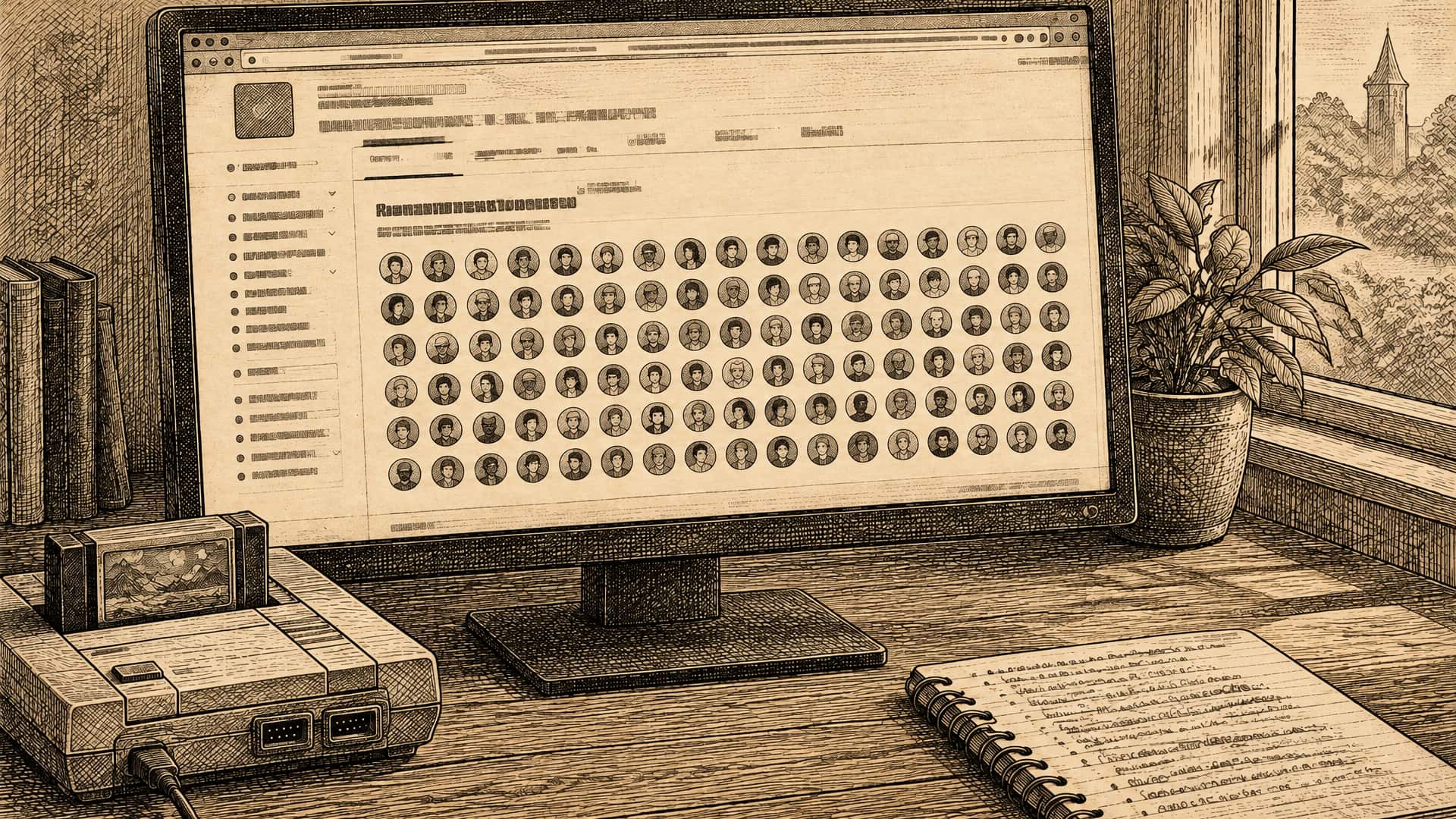
Some people choose their heading in that water with their eyes open. Volunteers rebuild the servers of old online games and say why, in their own words. One project, cMaNGOS, puts it like this: "If you want somebody to do something for you, pay them, but we are here to enjoy."
From the recordLF-DR-029
Others rebuild old Nintendo 64 games from the finished programs, in public. Three of those projects show 81, 99 and 176 contributor logins. A login isn't a person, but it's many hands.
From the recordLF-DR-004
One decompiler, Lewis, reports that Claude, Anthropic's model, struggled with the longest functions in the game he was rebuilding. He also wrote that "The community was more important than any model".
From the recordLF-DR-020
From the recordLF-DR-022
There's a builder I'll call the Keeper, one member of a public decompilation community, who works in the open and takes no money. He's right about something I wasn't, on those couches in 2008. He knows exactly whose water he's in. He reads the owner's terms before he starts, and he does the work where the work is allowed.
Slocum wrote about the weather on the long run across the Pacific, and it's the line I keep for water you don't own.
To know the laws that govern the winds, and to know that you know them, will give you an easy mind on your voyage round the world; otherwise you may tremble at the appearance of every cloud.Joshua Slocum · Sailing Alone Around the World (1900) · On ocean meteorology between Juan Fernandez and the Marquesas
He calls them laws. The wind isn't out to get anyone, and neither is a current. Both run by rules, and rules can be learned. An owner's terms are laws in that sense: written down, dated, and there for anyone who takes the trouble. "To know that you know them" is the harder part. Here it means keeping straight what the record has measured, the terms and the control, and what it hasn't, which is the value. A builder who never read the terms takes every notice for a storm aimed at him. It was posted. It was there to read.
Three separate research projects drew the same picture of who holds the control, each from its own records, and that part is solid. What that control is worth is another matter: no money or hours are documented for any rebuild, and the research says it plainly, "With value measured in no case, the claim cannot be scored on value."
From the record · not shownLF-M-400
From the record · not shownLF-M-433
So before you lay a heading, Emma, find out whose water it crosses. Read the owner's terms the way you'd read a tide table, as laws you can know, and draw them on your chart as their own line, apart from your heading. Then check your reckoning against a fix, and mark where the current honestly carried you.
Your heading is yours. The water belongs to someone else.
Navigator's Note
- a fix: a finding from the record
- the record on what it doesn't show
- my reckoning
- the log: my own public record
The Keeper is a composite: a type of builder drawn from the public decompilation communities in the research, not one person, and not anyone this letter names.
The memories in this letter are mine, told as I remember them. They're story, not evidence. The findings come from the research record, and each receipt opens to the row behind it.
These letters are produced by managed AI agents in Terrence's voice; the research and its readings were produced by Anthropic models. The direction, the checking and the revisions are mine. Anthropic sells AI, and parts of this record set AI beside human work, so weigh that as you read.